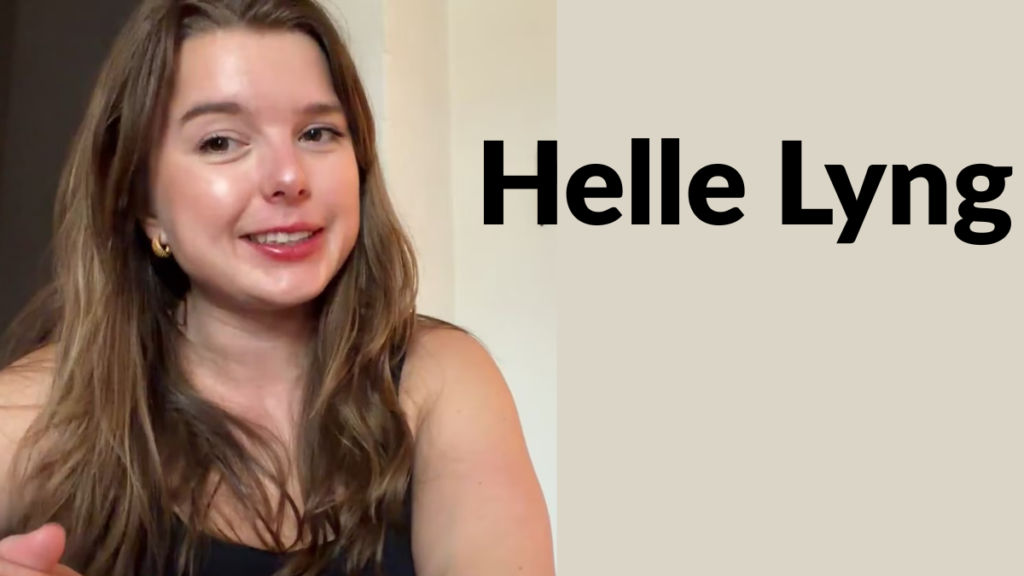

One question is all it takes to make a random reporter an international headline sometimes. This is precisely what happened with Helle Lyng, the Norwegian journalist whose name suddenly became one of the most talked about names on social media after an impromptu moment where Indian Prime Minister Narendra Modi spoke with her during his Norway visit.
Within hours searches related to Helle Lyng PM Modi, Norwegian journalist viral question and Oslo journalist Modi question started trending in countries. Anon inside source You started with a short question in an official event, turned to an international discussion about press freedom, ethics of journalism, political accountability and social media outrage.
So who was Helle Lyng and why did it become the week’s most international media story?
Quick Information
| Information | Details |
|---|---|
| Full Name | Helle Lyng (also reported as Helle Lyng Svendsen) |
| Profession | Journalist / Political Commentator |
| Nationality | Norwegian |
| Based In | Oslo, Norway |
| Media Association | Reporter / Commentator with Oslo-based newspaper Dagsavisen |
| Became Viral For | Questioning PM Narendra Modi during a Norway media event (The Economic Times) |
| Viral Question | “Why don’t you take some questions from the freest press in the world?” (The Economic Times) |
| 234K followers | |
| X (Twitter) | 100.5K Followers |
| Reportedly faced temporary suspension after the controversy according to Lyng’s claims (The Independent) | |
| Known For | Political reporting, commentary, press freedom discussions |
| World Press Freedom Context | Norway ranked #1 while India ranked #157 in 2026 press freedom rankings (frequently referenced during controversy) (The Economic Times) |
| Major Controversy | PM Modi Norway visit, press freedom debate, social media suspension claims |
Who Is Helle Lyng?
Helle Lyng is a Norwegian Journalist working for Oslo-based newspaper Dagsavisen. She was known in Norway mostly for political reporting and commentary, but until the viral Modi incident, few foreigners had heard of her.
After the hassle, Helle Lyng biography search interest ran through the roof after people tried to learn more about the journalist behind the viral moment.
Helle Lyng, who talked to Tetzner later explained that India was not the main country she covered but said journalists should question world leaders visiting their countries.
The Viral Incident During PM Modi’s Norway Visit.
The incident took place towards the conclusion of Prime Minister Narendra Modi’s official trip to Norway, and he was returning from a joint press interaction with Norwegian counterpart Jonas Gahr Støre.
As it turned out, this was not in any way a traditional open press conference with questions and answers as some social media users later described. Though, it was little more of a joint press statement, both the leaders read out their statements and PM Modi did not take questions from the media.
After the event had finished, and Narendra Modi was leaving towards the exit of the venue, Helle Lyng tried to ask him a question.
Her now-viral question was:
“Why Don’t You Take Some Questions From The Freest Press in the World?”
The comment referenced Norway’s first-place ranking in worldwide press freedoms. PM Modi did not respond and carried on walking, and the brief video went viral.
Later Helle Lyng herself shared the video and remarked that she did not expect a reply because, knowing beforehand there would likely be no driven questions at the event.
Why Did Helle Lyng Go Viral?
Multiple factors transformed the clip into an international incident.
For starters, Narendra Modi is still one of the worldís best-known political leaders, so even modest moments involving him draw huge media interest.
Secondly, the incident brought to light a konuşulmaz issue: political leaders and media accountability.
Social media also acted as a megaphone for every part of the exchange, which was another thing that made it so different. The video’s reach was expanded to networks of views via edited clips, translated subtitles, political commentary channels and influencer reactions.
In just a few hours, the Norwegian journalist covering her country’s participation in a diplomatic ceremony had evolved into an international controversy.
Also check: Danika Mason Apology After Viral Olympics Broadcast Moment
The Debate of Press Freedom: Norway vs India
In the following days, the Helle Lyng dispute grew into questions of press freedom rankings.
Norway, out-ranked a total of 180 countries in the Special Reporters Without Borders World Press Freedom Index for the year 2026 by securing the number one Rank for the 10th consecutive year. India is now further down the range of things as compared to last year, ranking 157 out of 180 countries.
This comparison of rankings was at the center of debate in the wake of the viral moment.
Helle Lyng supporters replied that Norway has a strong press culture, and direct questioning of political leaders is part of the deal.
But critics have pointed out, global press rankings often do not capture the richness and diversity of India’s massive media landscape.
What was most egregious to many on both ends of the political spectrum, however, was that even the rankings themselves had become a desirable part of this larger dialogue.
Supporters Called It Journalism
The incident drew widespread support for Helle Lyng from journalists, media professionals and free-speech supporters.
The argument was pretty simple: Journalism is about questioning people in power.
Foreign commentators noted that telling the truth and asking direct questions is part of a long tradition not seen by foreign audiences as confrontational Nordic journalism.
Later, Helle Lyng defended her actions insisting time and again:
“Our responsibility is to question.”
She contended that journalists cannot simply accept statements of prepared remarks from leaders at the top and let them get away with it.
Critics Called It Activism
The criticism of Helle Lyng was just as loud.
She was accused by her social media users of trying to fabricate a viral moment rather than do journalism.
Some argued that it was unfair to accuse PM Modi of not answering questions as the whole event in question was never meant to be a Q&A session.
Few users also called out Helle Lyng for either “picking on India selectively or being unnecessarily sensational in her tone.”
As the debate grew over whether people lived in small groups or in larger groups, attention shifted to not whether it was a question, but rather why the questioner asked.
Social Media Backlash and Account Suspension Claims
Helle Lyng was a target of a backlash online after the incident.
In public, she responded to allegations that she had been a “foreign spy” by calling some of such claims absurd.
The controversy deepened even more when Helle Lyng claimed later all that some of the accounts connected with Meta had become inaccessible.
According to reports, her Facebook, Instagram, and some services linked with Meta were suspended respectively or limited after that viral incident. This spurred new conversations about online harassment and digital censorship.
Backers said the situation sent a worrying message to journalists.
Critics even asked if the story of the suspension itself was being overblown.
Helle Lyng’s Later Interviews and Defense
With attention to the issue, Helle Lyng gave interviews justifying her behavior and her overall approach to journalism.
She insisted journalism needed to be sometimes uncomfortable because it must confront powerful leaders.
She further clarified that she had not anticipated any response from PM Modi.
But Helle Lyng said the point was not to have media questions during the event itself.
The subsequent meetings with the Indian diplomats attracted headlines, especially after human rights issues and media freedom were raised.
Why This Turned Into More Than Just a Virus Video
The Helle Lyng episode entered into all attention as it included a whole range of sensitive themes at once:
- Press freedom
- Journalism ethics
- Political communication
- Media accountability
- Online harassment
- International diplomacy
- Social media polarization
A nanoscopic two-second exchange became an elegant political/media controversy globally.
Helle Lyng explains why this joker keeps trending and trending long after it has sunk in Norway.
Conclusion
Helle Lyng may not have been a household name going into the Norway press interaction, but she is coming out of it as one of the most talked about reporters on the internet.
Whether you see her as a reporter doing her job or one holding the world to account, Helle Lyng undoubtedly generated one of the biggest moments in international media this year.
The PM Modi viral was a perfect case study of how immediately modern journalism no longer ends when the cameras cut. A few seconds of video seems sufficient to spawn global discussions of democracy, accountability and whether journalists should be able to challenge those in power.
And that is why the name of Helle Lyng suddenly became hard to ignore.
Also check: Katie Thurston Age, Height, Bachelorette Journey, Husband & Full Biography (2026) || Justine Bateman Age, Height, Net Worth & Career: Full Biography (2026)