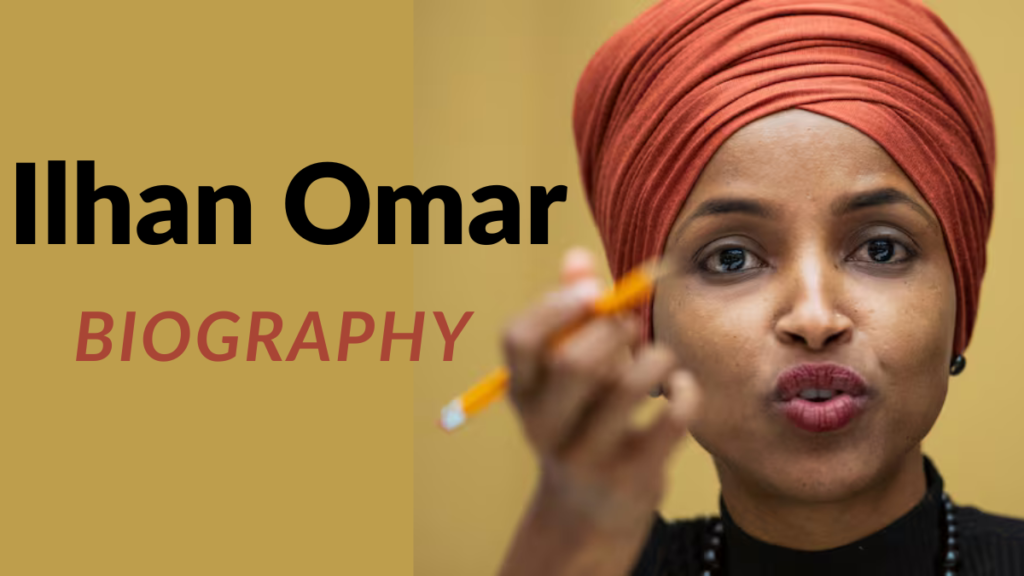

Ilhan Abdullahi Omar, born on October 4, 1982, in Mogadishu, Somalia, is an American politician, refugee-turned-lawmaker, and one of the most recognizable voices in contemporary U.S. politics. A naturalized American citizen, Omar serves as a member of the United States House of Representatives from Minnesota’s 5th congressional district. She is one of the first Muslim women elected to Congress, the first Somali-American lawmaker at the federal level, and one of the few refugees ever to serve in the U.S. legislature. Known for her outspoken views, distinctive identity, and unwavering political convictions, Ilhan Omar’s life story reflects the intersections of migration, religion, family, and democratic participation in modern America.
Ilhan Omar – Quick Information
| Category | Details |
|---|---|
| Full Name | Ilhan Abdullahi Omar |
| Date of Birth | October 4, 1982 |
| Age | 43 years (as of 2025) |
| Birthplace | Mogadishu, Somalia |
| Nationality | American |
| Citizenship | Naturalized United States Citizen (2000) |
| Profession | Politician, Author |
| Political Party | Democratic Party |
| Current Position | U.S. Representative from Minnesota’s 5th Congressional District |
| Year Elected to Congress | 2018 |
| Religion | Islam |
| Height | Approx. 5 ft 5 in (165 cm) |
| Marital Status | Divorced |
| Former Husband | Tim Mynett |
| Children | Three |
| Education | B.A. in Political Science & International Studies, North Dakota State University |
| Estimated Net Worth | Low-million-dollar range |
| Ethnic Background | Somali-American |
| Books Written | This Is What America Looks Like: My Journey from Refugee to Congresswoman (2020) |
| Known For | First Somali-American in U.S. Congress; among first Muslim women lawmakers |
| Residence | Minneapolis, Minnesota, USA |
Ilhan Omar – Social Media Presence
| Platform | Approx. Followers |
|---|---|
| X (Twitter) | 1.2 million |
| 1.3 million | |
| 821k | |
| YouTube | 1.81k |
Childhood in Somalia and the Trauma of War
Ilhan Omar was born into a relatively educated and politically aware family in Mogadishu. Her father, Nur Said Omar, was a teacher and later worked for the Somali government, while her grandfather held a senior position in the Ministry of Transport. These influences exposed her early to ideas of governance, responsibility, and public service.
Her childhood was abruptly disrupted by the outbreak of the Somali Civil War in the early 1990s. As violence spread through Mogadishu, Omar’s family was forced to flee their home. Like millions of others, they became displaced people overnight—carrying memories rather than possessions.
The family eventually found refuge in the Dadaab refugee camp in Kenya, one of the largest refugee camps in the world. Ilhan Omar spent nearly four years there, living in conditions defined by uncertainty, scarcity, and fear. These years left an indelible mark on her understanding of power, borders, and human dignity.
Immigration, Citizenship, and Finding a New Home
In 1995, Omar and her family were granted asylum in the United States. They initially settled in Arlington, Virginia, before moving to Minneapolis, Minnesota—a city with a growing Somali-American population that offered familiarity amid strangeness.
Ilhan Omar became a naturalized U.S. citizen in 2000. For her, citizenship was not merely a legal milestone; it represented safety, belonging, and the possibility of shaping the society that had given her refuge. Her later emphasis on immigration reform and refugee rights is deeply rooted in this personal experience.
Education and Political Awakening
Omar attended Edison High School in Minneapolis, where she quickly emerged as an engaged and outspoken student. She participated in student government and debate and often acted as an interpreter for her grandfather during community meetings. Translating political discussions from English into Somali gave her early exposure to civic participation and the importance of political voice.
She later enrolled at North Dakota State University, earning a degree in political science and international studies in 2011. Her academic training helped contextualize the injustices she had lived through, transforming personal pain into political awareness.
Religion and Public Identity
Ilhan Omar’s religion—Islam—is a central pillar of her identity. A practicing Muslim who wears the hijab, she has consistently framed her faith as a source of ethical guidance, compassion, and resilience. Her presence in American politics challenged long-standing assumptions about who belongs in positions of power.
While she has faced Islamophobia, harassment, and threats because of her religion, Omar has refused to dilute her identity for acceptance. Instead, she has argued that religious freedom is a core American value and that diversity strengthens democracy rather than weakens it.
Early Career and Grassroots Politics
Before entering elected office, Ilhan Omar worked closely with local communities. She served as a community nutrition educator at the University of Minnesota and later as a policy aide to the Minneapolis City Council. These roles grounded her political outlook in everyday struggles—housing insecurity, healthcare access, and educational inequality.
In 2016, she ran for the Minnesota House of Representatives and won decisively. With that victory, she became the first Somali-American legislator in the United States. Her tenure in the state legislature was brief but impactful, focusing on progressive taxation, education funding, and civil rights.
Rise to Congress and National Recognition
In 2018, Ilhan Omar won election to the U.S. House of Representatives from Minnesota’s 5th congressional district. This victory was historic. She became one of the first Muslim women in Congress, the first Somali-American in federal office, and one of the first former refugees to serve as a U.S. lawmaker.
Almost immediately, Omar emerged as a national figure. Her direct language, unapologetic progressivism, and willingness to challenge U.S. foreign and domestic policies drew both admiration and criticism. She became a symbol of a changing America—one shaped by migration, pluralism, and new political voices.
Family, Motherhood, and Personal Life
Family has always played a central role in Ilhan Omar’s life. She is a mother of three children, whom she has worked hard to shield from the harsh glare of political scrutiny. Omar frequently speaks about motherhood as a grounding force that keeps her focused on long-term consequences rather than short-term political gains.
Her personal relationships have often been the subject of public discussion. She was previously married to Ahmed Hirsi, with whom she shares her children. In 2020, she married political consultant Tim Mynett. Their relationship attracted significant media attention due to Mynett’s professional association with her campaign. The marriage later ended in divorce, and he is now widely referred to as her former husband, Tim Mynett.
Despite the attention, Omar has consistently asserted that her family life should not overshadow her legislative work.
Height, Presence, and Public Persona
Ilhan Omar stands approximately 5 feet 5 inches tall. While her height is a minor detail, her presence is unmistakable. Calm yet firm, articulate yet emotionally grounded, she brings a composed authority to political spaces that often thrive on confrontation. Her dignity under pressure has become one of her defining traits.
Net Worth and Financial Profile
Ilhan Omar’s net worth has been a topic of public interest, as required disclosures for elected officials are closely scrutinized. Estimates generally place her net worth in the low-million-dollar range. Her income primarily comes from her congressional salary, book royalties, and other disclosed sources.
Compared to many long-serving politicians, her financial standing is relatively modest. Omar has consistently emphasized transparency and ethical accountability, reinforcing her image as a public servant rather than a career politician driven by wealth accumulation.
Controversies, Criticism, and Courage
Omar’s political career has been marked by controversy, particularly around her criticism of U.S. foreign policy and powerful political lobbies. She has faced censure motions, intense media scrutiny, and persistent online harassment. At times, the criticism has crossed into open hostility.
Yet, Omar has remained resolute. She argues that dissent is a democratic obligation and that uncomfortable conversations are necessary for progress. Her willingness to endure backlash reflects the same resilience forged in refugee camps decades earlier.
A Legacy Still Being Written
Ilhan Omar’s life is a testament to the idea that democracy is enriched when those once excluded are allowed to lead. From war-torn Somalia to the halls of the U.S. Congress, her journey defies conventional political narratives.
She remains a polarizing figure, but also an undeniably influential one. Her story—rooted in displacement, faith, family, and fearless advocacy—continues to shape conversations about identity, power, and belonging in the 21st century.
Ilhan Omar is not just a politician; she is a living reminder that leadership can rise from the margins and redefine the center of power itself.