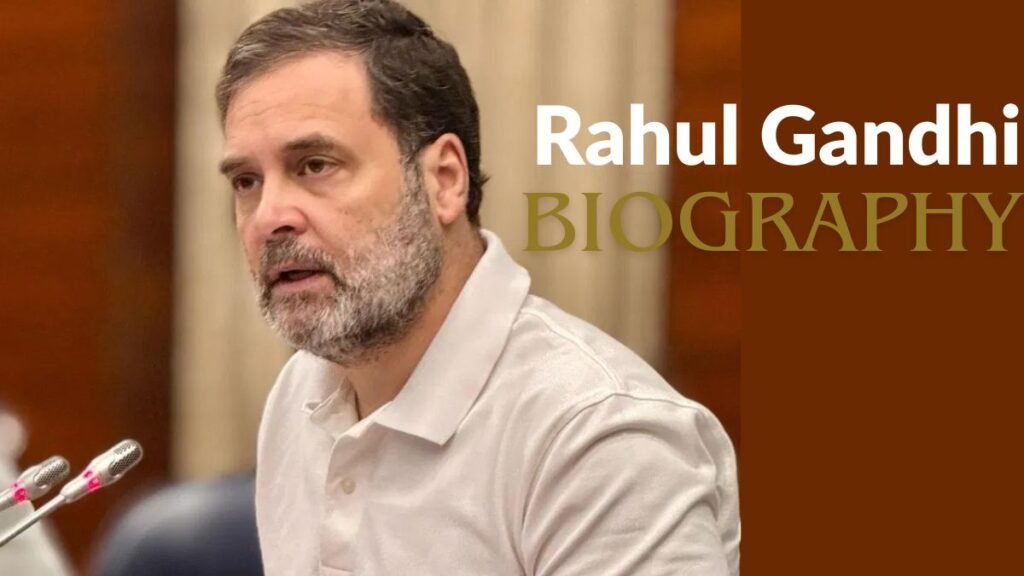

Rahul Gandhi stands as one of the most prominent and closely observed figures in Indian politics, not merely because of his lineage but due to the evolving nature of his leadership and ideas. Born into a family that has shaped the destiny of modern India, he carries the weight of history while actively engaging with contemporary political challenges such as inequality, democratic backsliding, unemployment, and social justice. Over the years, Rahul Gandhi has transformed from a reluctant political heir into a mass leader who emphasizes dialogue, empathy, and constitutional values.
In India’s democratic framework, Rahul Gandhi today occupies a constitutionally significant position as the Leader of the Opposition in the Lok Sabha, a post that is officially equated with the rank and status of a Cabinet Minister. This role places him at the center of parliamentary democracy, where he is responsible for holding the government accountable, safeguarding institutions, and presenting alternative policy visions. His politics, often analyzed through the lens of comparative government and politics, reflects a preference for decentralized power, social democracy, and institutional balance.
Rahul Gandhi Age
Rahul Gandhi, senior leader of the Indian National Congress was born on 19 June 1970 and is now aged around 55 years in reference to year 2026. He made his debut in Parliament in 2004 at the age of 33, when he was elected to the Lok Sabha from the Amethi constituency in Uttar Pradesh. In the 2024 general election, he ran for two seats – Rae Bareli in Uttar Pradesh and Wayanad in Kerala – both of which he won; He later elected to keep Rae Bareli as his seat in parliament.
Rahul Gandhi Biography
| Attribute | Details |
|---|---|
| Full Name | Rahul Gandhi |
| Date of Birth | 19 June 1970 |
| Age | Mid-50s |
| Birthplace | New Delhi, India |
| Father | Rajiv Gandhi (Former Prime Minister of India) |
| Grandmother | Indira Gandhi (Former Prime Minister of India) |
| Education | Rollins College (Bachelor’s), University of Cambridge (MPhil in Development Studies) |
| Religion | Hinduism |
| Caste | Kashmiri Pandit (Brahmin) |
| Height | Between 5 ft 7 in (171 cm) and 5 ft 8 in (173 cm) |
| Marital Status | Unmarried |
| Political Party | Indian National Congress |
| Current Designation | Leader of the Opposition, Lok Sabha (Cabinet-rank status) |
| Social Media | X (Twitter), Instagram, Facebook |
Rahul Gandhi Social Media Presence
| Platform | Follower |
| YouTube | 10M Subscribers |
| 12.4M Followers | |
| X (Twitter) | 28.1M Followers |
Vision, Ideology, and the Bharat Jodo Nyay Yatra
Rahul Gandhi’s political vision is rooted in the idea of building a democratic, prosperous, egalitarian, and just India, where opportunity is not determined by birth, wealth, or social identity. His politics consistently emphasizes constitutional morality, economic fairness, and social harmony. He has argued that true national strength lies not merely in economic growth but in justice, participation, and dignity for every citizen.
In pursuit of this vision, Rahul Gandhi undertook the Bharat Jodo Nyay Yatra (BJNY)
A Family Rooted in India’s Freedom Struggle
Rahul Gandhi was born on 19 June 1970 into the illustrious Nehru–Gandhi family, a lineage inseparable from India’s freedom movement and nation-building.
- Jawaharlal Nehru, his grand father and India’s first Prime Minister, shaped the foundations of modern India through parliamentary democracy, scientific temper, and non-alignment.
- Indira Gandhi, Rahul Gandhi’s grandmother, served as Prime Minister and played a decisive role during pivotal moments in Indian history.
- Rajiv Gandhi, his father, as Indian Prime Minister led India into the technological age and strengthened India’s global outlook.
The family’s association with Mahatma Gandhi is ideological and historical: the Indian National Congress, guided by Mahatma Gandhi, became the vehicle of mass mobilization against colonial rule. The Nehru–Gandhi family carried forward this Gandhian legacy of service, sacrifice, and commitment to pluralism.
Tragedy and Sacrifice
Rahul Gandhi’s life has been deeply shaped by personal loss in the service of the nation.
- Indira Gandhi was assassinated in 1984 while serving as Prime Minister.
- Rajiv Gandhi was assassinated in 1991 during an election campaign.
These tragedies, occurring at formative stages of Rahul Gandhi’s life, instilled in him a profound understanding of the costs of public service and strengthened his resolve to uphold democratic values.
Tragedy and Sacrifice
Rahul Gandhi’s life has been deeply shaped by personal loss in the service of the nation.
- Indira Gandhi was assassinated in 1984 while serving as Prime Minister.
- Rajiv Gandhi was assassinated in 1991 during an election campaign.
These tragedies, occurring at formative stages of Rahul Gandhi’s life, instilled in him a profound understanding of the costs of public service and strengthened his resolve to uphold democratic values.
Oratory and Engagement with Universities
Rahul Gandhi has delivered lectures and participated in discussions at several Indian and international universities. His speeches often focus on:
- Democratic institutions and constitutional values
- Youth participation in politics
- Comparative government systems and inclusive development
These interactions reflect his effort to bridge academic discourse with practical politics.
Oratory and Engagement with Universities
Rahul Gandhi has delivered lectures and participated in discussions at several Indian and international universities. His speeches often focus on:
- Democratic institutions and constitutional values
- Youth participation in politics
- Comparative government systems and inclusive development
These interactions reflect his effort to bridge academic discourse with practical politics.
Martial Arts, Fitness, and Personal Discipline
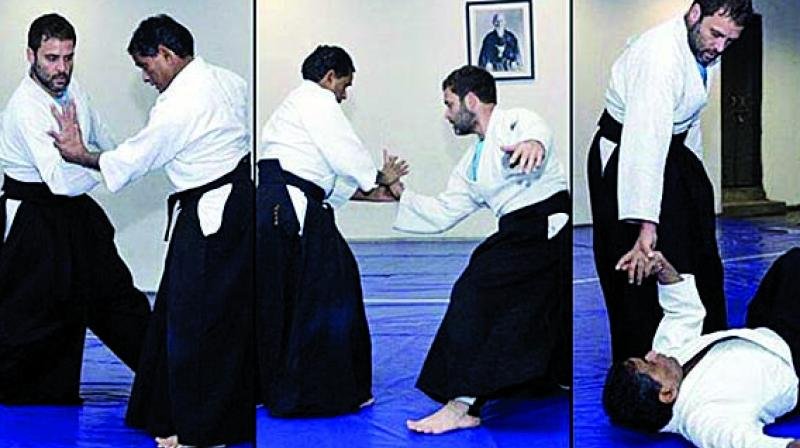
Rahul Gandhi is known for his commitment to physical fitness and discipline.
- He has trained in martial arts (Aikido), a practice emphasizing balance, restraint, and self-control.
- Regular exercise, swimming, and endurance activities form part of his routine.
This focus on fitness complements his public image as a leader capable of sustained physical and mental effort.
Adventurous Spirit: Bike Ride to Ladakh
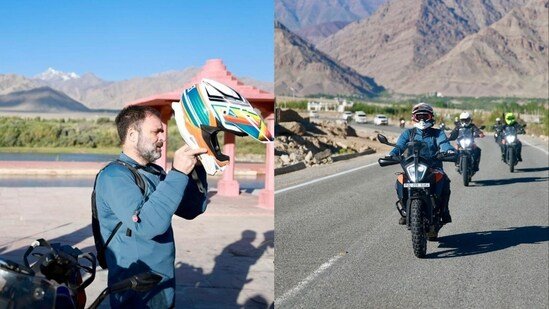
Rahul Gandhi’s motorcycle ride to Ladakh symbolized his connection with India’s frontiers and his respect for the armed forces and local communities. Riding through high-altitude terrain, he highlighted infrastructure, security, and environmental concerns in border regions.
The Kashmir Speech Amid Rain and Snowfall
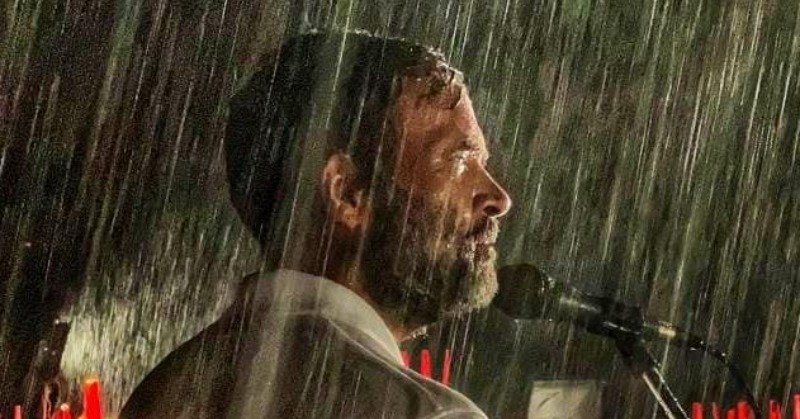
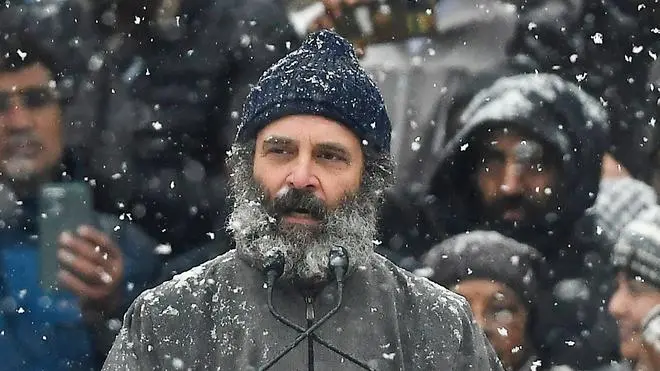
One of the most striking moments of Rahul Gandhi’s public life was his speech in Kashmir delivered amid heavy rain and snowfall. Addressing students and citizens in harsh weather, he emphasized unity, constitutional rights, and dialogue—demonstrating symbolic resilience and solidarity.
Bharat Jodo Yatra: 4,000 km from Kanyakumari to Kashmir
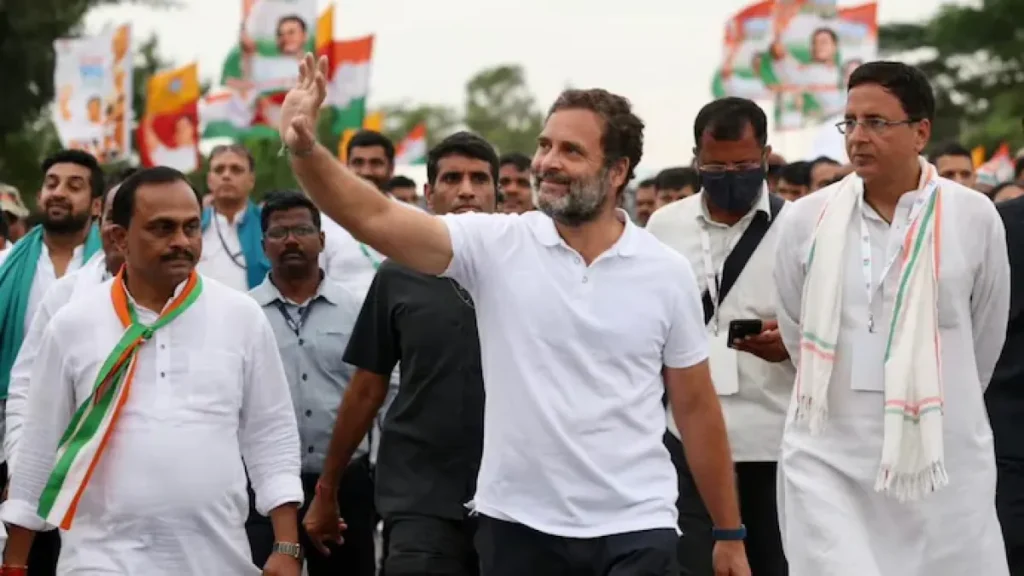
Rahul Gandhi led the historic Bharat Jodo Yatra, a nearly 4,000 km walk from Kanyakumari to Kashmir, often seen wearing a simple white T-shirt even in extreme cold.
This journey:
- Connected directly with farmers, workers, women, and youth
- Highlighted economic inequality and social polarization
- Became a landmark exercise in mass political communication
Compassion and Ground-Level Humanitarianism
Rahul Gandhi is frequently described as empathetic and accessible, especially toward marginalized communities. Publicly reported interactions include support and advocacy for:
- A cobbler, barber, potter, carpenter, truck driver, and daily-wage workers
- Students from disadvantaged backgrounds
- Victims of injustice and violence
He has also been associated with personal acts of assistance and encouragement, reflecting a leadership style centered on dignity of labor and human connection.
Support to Nirbhaya’s Family
Rahul Gandhi publicly expressed solidarity with Nirbhaya’s (victim of a gang rape, who lost her life due to fatal injuries) family and has been associated with efforts to support the victim’s brother in rebuilding his life and career, an act often cited as an example of personal compassion beyond formal politics.
Charity, Donations, and Personal Conduct
Known for a relatively simple lifestyle, Rahul Gandhi has made public donations of his salary and resources to relief efforts and social causes at various times. His conduct often emphasizes humility, listening, and engagement rather than spectacle.
Farsightedness and Political Predictions
Supporters note that Rahul Gandhi has repeatedly raised early warnings on issues such as:
- Economic inequality
- Institutional weakening
- Social polarization
Many of these concerns, articulated years earlier, later became central to national debate—often cited as evidence of his long-term perspective.
MPLAD Funds and Development Work
As a Member of Parliament, Rahul Gandhi has utilized MPLAD funds for:
- School and hospital infrastructure
- Drinking water projects
- Community facilities in underserved areas
These initiatives are frequently contrasted by supporters with underutilization of funds by many other MPs.
Advocacy for Farmers, Forests, industries and the Marginalized
Rahul Gandhi has consistently taken positions supporting:
- Farmers, including during nationwide farmer protests
- Opposition to indiscriminate forest cutting
- Critique of the Land Acquisition Bill provisions affecting livelihoods
- Adivasi rights and environmental justice
- Enhanced participation of SC, ST, OBC, women, and the poor in India’s growth story
- On May 11, 2011, he was arrested in Bhatta Parsaul, a village in Uttar Pradesh for supporting farmers who were protesting for a fair compensation for their land, which authorities had acquired for a highway project.
- He has strongly opposed the concept of crony capitalism and advocates for resource distribution, fair competition, economic equality and production led economy.
These stances align with a vision of inclusive development rooted in constitutional morality.
Rahul Gandhi in Comparative Politics
Within the framework of comparative government and politics, Rahul Gandhi represents a leadership model emphasizing:
- Strong institutions over centralized power
- Dialogue over coercion
- Social democracy over oligarchic growth
His politics are often analyzed alongside global democratic movements advocating equity, federalism, and civil liberties.
Conclusion
Rahul Gandhi’s life and career—his age, education, religion, caste background, family legacy, and marital status—form only the outer framework of a far deeper political journey. As Leader of the Opposition with cabinet-equivalent rank, he occupies a constitutionally vital position in India’s democracy. Through sustained grassroots engagement, social media outreach, and advocacy for marginalized communities, Rahul Gandhi continues to shape debates on governance, equality, and the future of Indian politics.
Viewed through the lenses of comparative government, state politics, and lived public experience, Rahul Gandhi remains a central figure in India’s evolving democratic narrative, balancing inherited legacy with an ongoing effort to redefine leadership in the 21st century.